Boat days are better when your home dock fits your boat and your routes are easy. If you are choosing between Punta Gorda Isles and Burnt Store Isles, you are already close to great water and a laid-back boating lifestyle. The question is which community fits your vessel, your budget, and your daily routine. In this guide, you will get a clear comparison, a practical checklist, and a simple decision framework tailored to boaters. Let’s dive in.
Quick take: PGI vs BSI for boaters
- Punta Gorda Isles: Established canals with a wide mix of ages and configurations. You often get a shorter run to Charlotte Harbor and a broad range of home styles and price points. Tighter canals exist in some pockets, so maneuvering can be more exacting for larger yachts.
- Burnt Store Isles: Later-era planning with many broader canals and larger turning basins. Often designed with bigger vessels in mind and a higher share of newer homes. Expect a somewhat longer transit to the harbor but easier handling in many sections.
- Bottom line: Boatability is property-specific. Verify canal width, depth at low tide, turning room, and dock permits for the exact lot you are considering.
Navigation and canal design
Canal width and depth
In PGI, older sections can have narrower, winding canals, while newer pockets may open to larger basins. This can limit the comfortable length or beam you can handle at the dock. In BSI, many sections were planned with broader and deeper canals to support larger vessels.
What to verify for your boat:
- Measure canal width at your lot and along the route to open water.
- Confirm depth at mean low tide and any recent dredging history.
- Check for known shoaling and who is responsible for maintenance.
Turning basins and docking
PGI offers turn basins in many spots, but sizes vary, and some require careful multi-point turns. Dock orientation can be tight, with parallel approaches in certain stretches. BSI more often provides larger, consistently designed turning areas that simplify docking for larger-LOA boats.
What to verify:
- The diameter or effective length of the nearest turning basin.
- Neighboring dock and piling locations that might limit your turn.
- Your preferred docking approach for wind and current.
Tides, bridges, and clearances
Depth and clearance vary by canal and route. Many paths to Charlotte Harbor avoid fixed bridges, but you should still confirm your exact clearance needs. Tidal swings in the Charlotte Harbor area make low-tide depth an important factor for drafts over about 3 to 4 feet.
What to verify:
- Charted depths, lowest predictable water levels, and recent local surveys.
- Any fixed bridges or power lines on your route, including posted clearance.
- Responsible agency for dredging and future maintenance plans.
Time to Charlotte Harbor
PGI generally offers a shorter and more direct run to Charlotte Harbor. BSI is typically farther inland, which can add distance, even with a straightforward route. Your actual time depends on nautical miles, canal speed, and the exact location of your dock, so plot your route rather than relying on generalized minute estimates.
What to verify:
- Your route on a chartplotter and total nautical miles to the harbor.
- Safe speed expectations in canals and channels.
- Any no-wake zones along the way.
Homes, lots, and docks
Home ages and styles
PGI gives you a wide spectrum: mid-century cottages, 1970s–1990s homes, and many renovations or rebuilds. You may find entry-level waterfront options or high-end upgrades on desirable canals. BSI skews newer, with more custom builds and modern Florida architecture.
Lot size and orientation
In PGI, lots are often narrower and close together, with contiguous seawalls. That can yield great proximity to downtown amenities but tighter dock spacing. In BSI, many lots provide wider canal frontage and larger buffers, which can allow longer docks and higher-capacity lifts.
Dock features and what to check
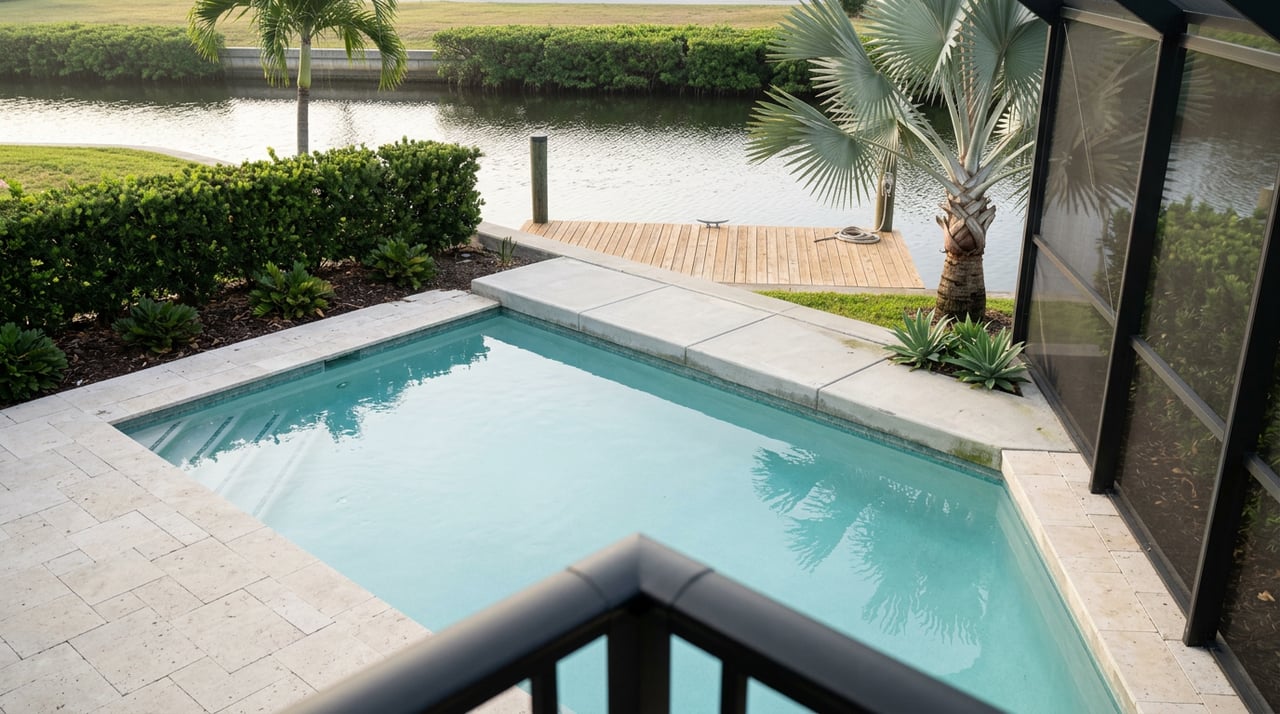
Both communities feature boat lifts, power at the dock, and seawalls. BSI properties often include larger lifts and modern dock infrastructure. In either location, confirm lift capacity, as-built dock plans, electrical amperage, and whether your intended upgrades are permitted.
Rules, permitting, and responsibilities
Associations and restrictions
PGI has multiple civic and property owner associations, and rules vary by section. It is not a single gated community, so you will want the specific CC&Rs for the lot. BSI typically has a formal property owners association with deed restrictions and architectural standards, and some sub-sections are gated.
What to verify:
- CC&Rs and dock rules for the exact property.
- Whether your BSI section is gated and any related fees.
- Architectural committee guidelines for lifts, dock extensions, and visible storage.
Dock permits, lifts, and construction
Docks, lifts, and seawall work often require permits from the city or county, and certain projects may need state or federal approvals. Larger lifts can require engineered plans and specific insurance documentation. If you plan upgrades, review existing permit records and confirm local requirements.
What to verify:
- Prior dock permits, repair history, and any open or expired permits.
- Allowed dock length, height, and materials under the CC&Rs.
- Whether enclosed boathouses are allowed, limited, or prohibited.
Seawalls, dredging, and flood zones
Waterfront owners are commonly responsible for their seawalls, though some agreements vary by section. Seawall age and material will drive long-term cost and timing for replacement. For navigability, understand who funds dredging, the schedule, and how that impacts future maintenance and value.
What to verify:
- Seawall inspection reports and recent repairs or permits.
- Canal maintenance plans, funding sources, and past dredging work.
- Flood zone designation and elevation certificate for insurance planning.
Cost, insurance, and resale
Purchase price trends
PGI tends to offer broader price variety and more renovation candidates, which can be appealing if you want to add value to a dock or home. BSI often commands a premium for larger lots, newer builds, and purpose-designed canals and basins. Use recent comps on a per-street basis and compare true apples-to-apples waterfront sales.
Dock and seawall capital costs
Seawall replacement, dock rebuilds, and lift upgrades can run from tens of thousands to much more, depending on scope and engineering. That makes documentation vital when you evaluate a property. Ask about any special assessments or reserves that could affect your long-term budget.
Insurance considerations
Flood insurance, boat coverage, and dock-related endorsements vary by elevation, condition, and location. Properties with documented, permitted docks and well-maintained seawalls can reduce complications. If you are bringing a larger vessel, discuss your coverage needs in the context of channel depth, surge exposure, and lift capacity.
Resale drivers for boaters
Resale is strongest when a property can document deep water, large turning basins nearby, high-capacity lifts, and a short, unobstructed route to Charlotte Harbor. In PGI, proximity often helps with harbor access. In BSI, newer construction and bigger-dock potential can attract buyers with larger boats. In both, clean documentation and clear boating advantages support stronger offers.
Due diligence checklist for showings
Bring this list to your next tour and confirm each item in writing or through inspections:
- Canal width at the property, nearby canal widths, and the nearest turning basin size.
- Bottom depth at mean low tide and any recent dredging records.
- Nautical miles to Charlotte Harbor and any bridges or overhead lines on the route, with clearances.
- Dock documentation: as-built plans, permits, repairs, lift capacity, and electrical service.
- Seawall age, material, inspection report, and permit history for repairs.
- HOA or POA CC&Rs for docks, lifts, boathouses, and exterior storage.
- Flood zone designation and elevation certificate, plus a recent insurance estimate.
- Local codes and permits required for planned dock modifications.
- Utilities at the dock, such as shore power amperage, potable water, and pump-out availability.
- Nearby marina services for fuel, haul-out, repair, and the closest public ramp.
- Any deeded water easements or riparian rights affecting access.
Decision framework for your priorities
Use these prompts to match each community to your boating style:
- Shortest route to Charlotte Harbor. If your top priority is a faster run to open water, you will likely favor PGI. Always plot the route for the exact lot to confirm.
- Larger yacht at a private dock. If you want easier maneuvering and bigger-lift potential, BSI often fits better. Confirm canal dimensions, basin size, and lift limits.
- Renovation potential and value. PGI typically offers more entry points and upgrade opportunities, including docks you can improve to suit your boat.
- Turnkey home and dock. BSI often delivers newer homes with modern dock infrastructure that is ready on day one.
- Rules and restrictions. Expect more uniform POA enforcement in BSI. In PGI, rules vary by section. In both, review CC&Rs before you offer.
- Stronger resale to boaters. Prioritize lots that document deep water, generous turning room, high-capacity lifts, and a short harbor route. Keep this documentation with your records.
A simple scoring method:
- Rate each candidate property 0 to 5 on: convenience to harbor, maneuverability for your boat size, and value for your plans. Weight the category that matters most and compare total scores across PGI and BSI options.
Next steps
Both Punta Gorda Isles and Burnt Store Isles offer outstanding access to Charlotte Harbor. The right choice comes down to the specifics of your vessel, the daily routes you prefer, and how much you value newer construction versus downtown proximity. With a clear checklist and a measured route plan, you can feel confident about your short list.
If you want an experienced, hands-on guide who understands waterfront living and remote buyer needs, reach out to Danene Bazon PA. You will get concierge-level support, from plotting routes and reviewing permits to coordinating inspections and a smooth closing.
FAQs
Which Punta Gorda community suits large yachts best?
- Burnt Store Isles often has broader canals and larger turn basins designed for bigger vessels, but always verify canal width, depth at low tide, and permitted dock dimensions for the exact property.
How quickly can I reach Charlotte Harbor from each area?
- Punta Gorda Isles is generally closer to the harbor, though actual time depends on nautical miles and canal speeds; plot the route for the specific lot to get a realistic estimate.
Who handles canal dredging and maintenance in PGI or BSI?
- Responsibility varies by section and may involve private owners, a POA, or a county program; check local records and association minutes for history and funding.
Are there strict HOA or POA rules that limit dock or lift size?
- BSI typically has a more formal POA with uniform enforcement, while PGI rules vary by pocket; review CC&Rs and architectural guidelines before you make an offer.
What should I look for in a seawall inspection before buying?
- Ask for the seawall’s age, material, condition report, and repair permits, and get an engineer’s estimate of remaining life and replacement costs to inform your budget.