Buying near the Gulf feels exciting, but lining up the right insurance can be confusing. You want clear answers on what to buy, how deductibles work, and when to bind coverage so your closing stays on track. This guide breaks down the essentials for Fort Myers Beach buyers, from wind and flood policies to timing, inspections, and premium-saving tips. You will know what to ask, what to collect, and how to avoid last-minute surprises. Let’s dive in.
The three policies most buyers need
Homeowner coverage basics
A standard homeowner policy protects the structure, your belongings, personal liability, and additional living expenses if a covered loss forces you out of the home. For most single-family residences, the typical policy form is HO-3. If you are buying a condo, you will likely carry an HO-6. If you plan to rent the property to others, a landlord or dwelling policy form may apply.
Coastal policies in Florida often treat wind differently. Some include wind or hurricane coverage within the policy, while others exclude it or require a separate endorsement. Always verify whether wind is included, excluded, or limited, and check if it carries its own deductible.
Windstorm and hurricane coverage
In high-wind coastal areas like Fort Myers Beach, windstorm or hurricane protections may be built into a private homeowner policy, added as a separate wind endorsement or policy, or obtained through a state-sponsored insurer of last resort if private options are limited. Wind coverage usually has different deductibles and underwriting standards than the rest of your policy. Insurers may also apply wind mitigation credits if your home has qualifying features like impact-rated openings, a hip roof, or hurricane straps.
Flood insurance facts for barrier island homes
Standard homeowner policies do not cover flood or storm surge. Flood coverage is typically purchased either through the National Flood Insurance Program or through private flood insurers. Many properties on Fort Myers Beach are in FEMA Special Flood Hazard Areas, where lenders generally require flood insurance when you have a mortgage. You will often need an Elevation Certificate to rate and bind flood coverage accurately.
Be mindful of timing. New NFIP policies generally have a 30-day waiting period before coverage begins. Some private flood insurers may have different waiting periods. Ask up front and plan around your closing date.
Condo and association coverage
If you are buying a condo, the association maintains a master policy for the building. Your HO-6 policy covers interior finishes, your belongings, liability, and often loss assessment. Review the association’s master policy scope and the master deductible, since large deductibles can be assessed to unit owners after a covered loss. Match your HO-6 limits and loss assessment coverage to what the master policy does not cover.
How deductibles work in Florida
Standard vs hurricane deductibles
Most homeowner policies carry a standard dollar deductible that applies to common perils. In coastal Florida, wind or hurricane losses may trigger a separate deductible that is larger and often expressed as a percentage of your dwelling limit. For example, a 2 percent hurricane deductible on a $300,000 dwelling limit equals $6,000 out of pocket before coverage applies to a hurricane loss.
Triggers you should know
Hurricane or wind deductibles do not apply to every claim. They activate based on specific policy language. Some policies use a trigger when the National Hurricane Center declares a hurricane. Others apply the deductible when hurricane-force winds affect your property. Read how your policy defines the trigger and whether the deductible applies per occurrence, per season, or annually.
What this means for your budget
Coastal policies tend to have higher wind or hurricane deductibles than inland policies. Compare the size of the deductible, the trigger wording, and how it applies to partial losses. Knowing this up front helps you plan your emergency fund and decide whether to select a higher or lower wind deductible.
When to quote and bind your policy
What lenders require at closing
Your lender will require proof of hazard insurance in force at closing. If the home is in a Special Flood Hazard Area, the lender will also require flood insurance. The typical proof is an insurance binder or a declarations page with your coverage limits, effective date, and the lender listed as mortgagee or additional interest.
Smart timeline from contract to closing
Use this simple schedule so your insurance is ready when the closing day arrives:
- Day 0 - Contract signed: Request the seller’s current declarations page and gather property details for quotes.
- During the inspection period: Order a wind mitigation inspection if the home has hurricane-ready features. Request an Elevation Certificate from the seller or association, or order one if needed.
- 30 to 45 days before closing: Finalize quotes and be ready to bind homeowner and wind coverage. Start flood insurance early, especially if using NFIP due to the typical 30-day waiting period.
- At closing: Provide the binder or declarations page showing the lender as mortgagee and the correct effective date.
Avoid common timing pitfalls
The biggest timing mistake is waiting too long to start flood coverage. If you need an NFIP policy, the usual 30-day waiting period means a last-minute bind may not protect you right away. Some private flood carriers may offer shorter waiting periods. Ask each insurer about waiting period rules before you choose.
Handling last-minute issues
If binding must occur right at closing, coordinate with your lender and closing agent to ensure the effective date aligns with the closing date. Keep copies of the contract, inspection reports, Elevation Certificate, mitigation reports, and the binder or declarations page so your lender and closing team can clear conditions without delays.
Features that affect premiums on Fort Myers Beach
Flood zone and elevation
Barrier-island characteristics and FEMA flood zones drive flood pricing and underwriting. V and VE zones are coastal velocity zones with the highest risk due to storm surge and wave action. Properties with living spaces elevated above Base Flood Elevation typically see lower flood premiums. An Elevation Certificate helps insurers rate accurately and is often required to bind coverage.
Roof and wind mitigation
Roof age and materials matter. Newer coverings, hip roof designs, and secondary water resistance often earn credits. Roof-to-wall connections like hurricane straps and clips, plus proper underlayment, can reduce your perceived risk. Document any features during inspections to secure wind mitigation credits.
Openings protection and foundation
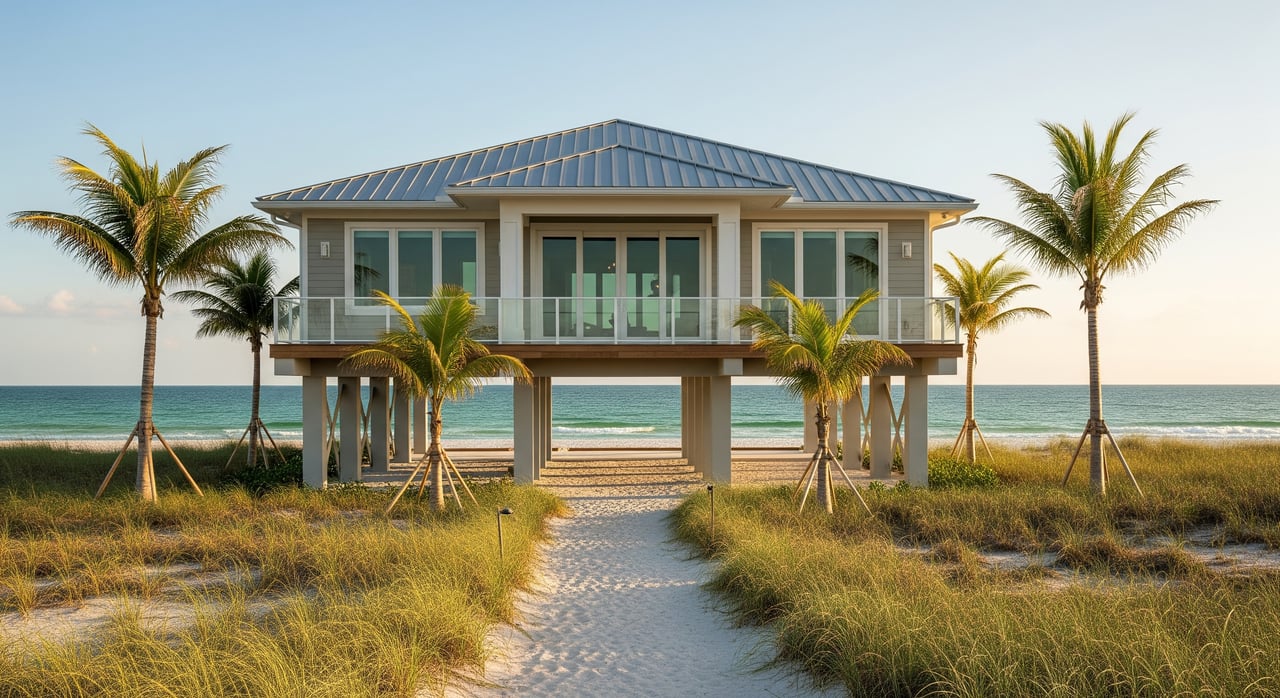
Impact-rated windows and doors or installed shutters can reduce wind-related premiums. For homes on pilings or raised slabs, living areas above flood elevation and compliant lower-level construction can positively affect underwriting. Features like breakaway walls below the living area are common in coastal construction and may influence insurability.
Age, maintenance, and use
Older systems or deferred maintenance can raise premiums or cause an insurer to require updates before binding. Expect extra scrutiny for roof age, electrical, and plumbing. Usage matters too. Full-time, seasonal, and short-term rental use may require different policy forms or endorsements. If you plan short-term rentals, discuss proper endorsements early.
Claims history and seawalls
Prior wind or flood claims can increase premiums or limit options. Provide documentation of improvements like a newer roof or newly installed shutters to help insurers apply credits. Seawalls or bulkheads can help manage erosion in some contexts but they do not remove flood risk or lender requirements for flood coverage.
Make the most of your inspection period
Documents to collect early
Gather the paperwork that insurers need so quotes come back quickly and accurately:
- Seller’s insurance declarations page
- Elevation Certificate
- Association master policy summary and master deductible for condos
- Wind mitigation inspection report and any supporting invoices
- Prior loss history or seller disclosures
Get and compare quotes efficiently
Prepare a property facts packet with year built, square footage, construction type, roof age and material, presence of impact openings or shutters, foundation type, and flood zone. Quote with multiple sources, including local independent agents who write coastal properties and several private insurers. Consider the state insurer of last resort only as a fallback if private coverage is not available. For each quote, ask:
- Is wind or hurricane coverage included or separate?
- What are the exact deductible amounts and how do triggers work?
- What is the waiting period for flood coverage?
- What inspections or documents are required to bind?
Binding coverage and delivering proof
Once you select a carrier, request a binder or declarations page that shows the effective date and lists your lender as mortgagee. Confirm with your lender and closing agent that the document format meets their requirements. Ensure any required flood policy will be effective at or before closing, especially if an NFIP waiting period applies.
Post-purchase mitigation plan
After closing, consider improvements that can lower future premiums. Common steps include roof replacement using impact-rated materials, installing shutters or impact windows, adding secondary water resistance, elevating utilities, and obtaining updated mitigation paperwork. Keep receipts and reports to support future rate reviews.
Quick buyer checklist
- Verify which policies you need: homeowner, wind endorsement or policy, and flood.
- Confirm wind is included or excluded in your homeowner policy.
- Ask how hurricane deductible triggers work and whether it is percentage-based.
- Secure an Elevation Certificate and wind mitigation inspection.
- Start flood insurance early to account for waiting periods.
- Match condo HO-6 coverage and loss assessment to the association’s master policy and deductible.
- Collect all documents for your lender: binder or declarations page, inspections, and certificates.
- Plan mitigation improvements that may reduce premiums over time.
A little upfront planning can save you time, stress, and money. If you want a smooth path from contract to keys in Fort Myers Beach, partner with a local pro who can coordinate steps and keep your closing on track. For concierge-level guidance before, during, and after your purchase, connect with Danene Bazon PA.
FAQs
Does a homeowner policy cover flood in Fort Myers Beach?
- No. Flood and storm surge are not covered by standard homeowner policies. You need a separate flood policy through the NFIP or a private flood insurer.
What is a hurricane deductible and when does it apply?
- It is often a percentage of your dwelling limit and applies only to wind or hurricane losses when specific policy triggers are met. Read your policy to confirm the trigger.
Do I need flood insurance if my lender requires it?
- Yes. Homes in Special Flood Hazard Areas typically require flood insurance when you carry a mortgage. Your lender will expect proof at closing.
How early should I start insurance shopping before closing?
- Start right after your contract is signed. Quote during the inspection period and plan to bind well before closing, especially for flood coverage with waiting periods.
What documents help me get accurate quotes on Fort Myers Beach?
- Elevation Certificate, wind mitigation report, roof details, construction type, and the seller’s prior declarations page help insurers rate your property correctly.
I am buying a condo. What should my HO-6 cover?
- Interior finishes, personal property, liability, and loss assessment. Verify the association’s master policy scope and deductible so your HO-6 fills any gaps.
Can improvements lower my premium after I buy?
- Yes. Documented wind mitigation features, newer roofs, impact-rated openings, and accurate elevation data can help reduce future premiums.