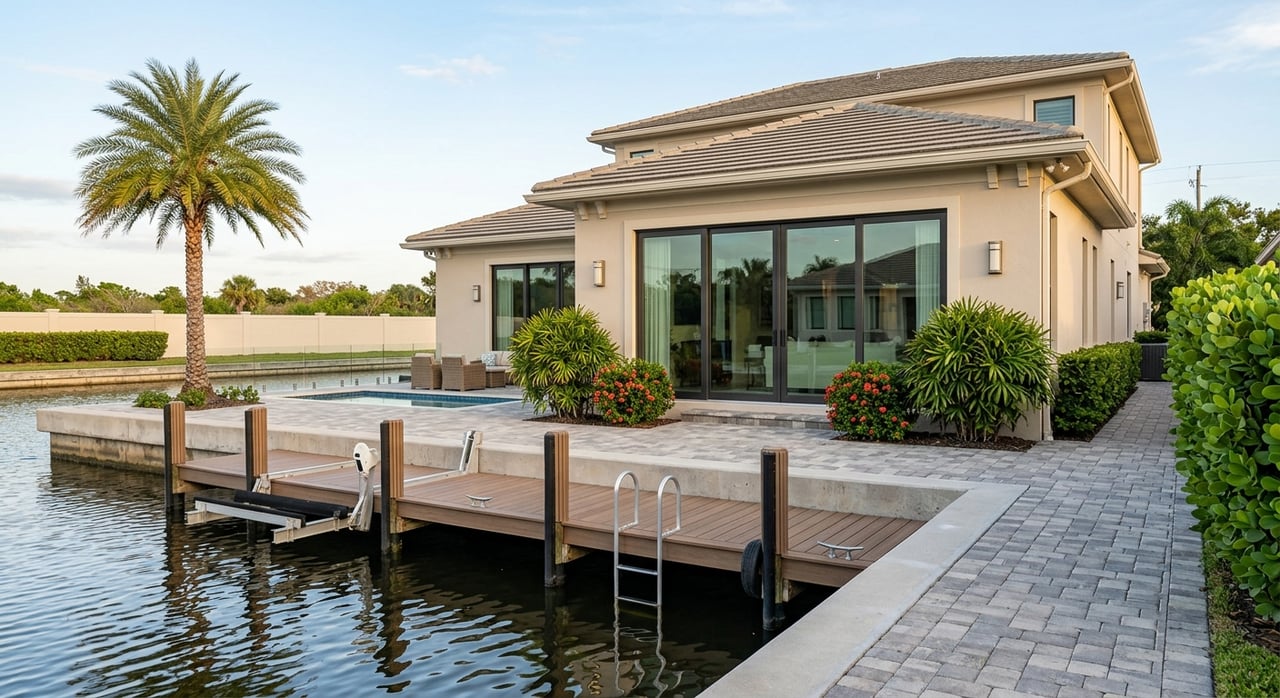
If you picture life in Punta Gorda with a boat in the backyard, you are not alone. Canal homes here can offer direct access to some of Southwest Florida’s best boating waters, but not every waterfront property works the same way. If you want to choose the right canal home for your lifestyle, it helps to look past the view and focus on access, dock options, costs, and day-to-day upkeep. Let’s dive in.
Start With Your Boating Goals
The right canal home starts with a simple question: what kind of boating do you want to do? Your answer shapes where you should focus and what details matter most.
Punta Gorda connects to Charlotte Harbor, the Peace River, the Myakka River, and the Gulf of Mexico through Boca Grande Pass. The city also maintains more than 50 miles of residential canals, so buyers have real variety. That said, canal access is not one-size-fits-all, and the best fit depends on your boat, your routine, and how much flexibility you want.
Think About Your Boat First
Before you fall in love with a house, think about your boat’s size, height, and draft. A canal home that looks perfect from the street may not work if your route to open water includes tight turns, a fixed bridge, or dock limits that affect your lift setup.
If you do not own a boat yet, this step still matters. Buying with your future boating plans in mind can help you avoid outgrowing the property later.
Compare PGI and Burnt Store Isles
In Punta Gorda, many canal-home searches center on two city-managed canal maintenance districts: Punta Gorda Isles and Burnt Store Isles. Both offer canal-front living, but they function differently.
Punta Gorda Isles Basics
Punta Gorda Isles, often called PGI, includes 91 miles of seawall and 45 miles of canals and inlets. The city says most of PGI has deep, wide canals with no fixed bridges, which makes it a natural starting point for many buyers looking for sailboat-water access.
That does not mean every PGI lot is identical. Some routes in PGI do cross fixed-clearance bridges, so the specific lot and route still need to be checked carefully.
Burnt Store Isles Basics
Burnt Store Isles, or BSI, includes 18 miles of seawall and 9 miles of canals. It has a boat lock and perimeter-canal sections, which creates a different boating experience than many homes in PGI.
City code also notes a different passage standard in typical perimeter canals in BSI. Those areas generally require a 40-foot passageway instead of the 50-foot standard used elsewhere, which can affect what fits comfortably at the dock.
Check True Open-Water Access
One of the biggest mistakes buyers make is assuming all canal homes offer the same trip to open water. In Punta Gorda, that is not the case.
The city identifies multiple access channels and slow-speed zones, including Bass Inlet, Buckley’s Pass, Colony Point, Fishermen’s Village, Laishley Park Marina, Pompano Inlet, Ponce de Leon, Punta Gorda Boat Club, Punta Gorda Marina, and the PGI parallel channel. All canals within the PGI and BSI districts are also in slow-speed or minimum-wake zones.
Ask if It Is Truly Sailboat Water
If sailboat access is important to you, verify it lot by lot. A city boating study observed about 12 feet of clearance at the Bass Inlet and Sailfish bridges and about 13 feet at Colony Point during normal high tide.
That means route planning matters just as much as the lot itself. A home may be in a sailboat-friendly area overall, but your exact path and tide conditions still need to be confirmed.
Match the Lot to the Dock
A canal home is not just about the house. In Punta Gorda, dock and lift options are tied closely to the lot’s seawall length and canal width.
For many single-family lots with less than 85 feet of seawall, the default rule is a freestanding concrete dock that projects no more than 10 feet waterward, plus one boat lift or up to three mooring piles. Lots with 85 feet or more of seawall usually offer more flexibility.
Seawall Frontage Matters
Two homes with similar square footage can offer very different boating setups if one has more seawall frontage. That is why measuring the usable waterfront is just as important as checking the home’s interior features.
A longer seawall may create more options for a lift, dock layout, or mooring arrangement. A shorter frontage can still work well, but it may limit what can be built or changed later.
The Dock Envelope Can Be Smaller Than It Looks
The city uses 45-degree structure limitation lines from the side property corners. In simple terms, that can narrow the usable dock area more than buyers expect when they first see a wide-looking canal lot.
This is especially important if you plan to modify the dock, add a lift, or accommodate a larger boat. Street-side impressions do not always reflect what is possible over the water.
Some Areas Have Extra Limits
Parts of Ponce de Leon, Pompano, Bass, and Tarpon inlets have additional waterward limits in city code. So even if two homes look nearly identical online, their dock potential may be very different.
If a dock or lift does not fit standard rules, an owner can apply for a Canal Construction Special Permit. That process involves city review and a public hearing, so it is better to understand any limitations before you buy.
Budget for Canal Ownership Costs
Canal homes come with special costs that buyers should plan for early. These are part of owning the lifestyle, and they should be reviewed alongside taxes, insurance, and regular home expenses.
For fiscal year 2026, the city lists canal maintenance assessments of $1,350 per single-family parcel in PGI and $1,010 per single-family parcel in BSI. These are city-authorized special assessments, and they are separate from any private HOA dues.
Review City Rules and Community Rules
Punta Gorda also regulates docks, piers, piles, bulkheads, seawalls, and boat lifts through its permit process. Because of that, buyers should confirm both city requirements and any subdivision governing documents before closing.
This step matters whether you are planning improvements right away or just want to keep your options open. It can save you from surprises after the purchase.
Know the Watercraft Parking Rules
For some buyers, trailer or watercraft storage is just as important as canal access. Punta Gorda’s Special Residential Overlay includes PGI, Burnt Store Isles, and Burnt Store Meadows, and it has specific watercraft parking rules.
A residence may keep one watercraft on the premises or driveway. Overnight parking after 7 p.m. requires a no-charge permit, and that overnight allowance is limited to two consecutive nights, four times per calendar year.
Understand Ongoing Maintenance
Canal-front living is rewarding, but it also comes with hands-on upkeep. If you are relocating or buying from out of state, this is one of the most important parts of the decision.
The city performs annual seawall assessments. It also notes that seawall replacement typically takes about three to four weeks once work begins, and owners are responsible for moving boats away from replacement work and for damage to their own docks, lifts, davits, or other personal property.
Expect Routine Waterfront Care
The city says canal dredging and dockside maintenance dredging help keep waterways navigable. It also advises owners not to let grass clippings, debris, or other discharges enter the canal.
The city notes that a seasonal canal odor can happen once a year when the water flips, usually lasting about two weeks. It is a normal part of canal conditions, but buyers should know about it going in.
Check for Mangroves
Mangroves can affect maintenance and trimming plans. The city notes that mangrove trimming is regulated by the Florida Department of Environmental Protection, that professional trimmers are required for mangroves taller than 10 feet, that no more than 25 percent of a mangrove’s foliage may be trimmed in a year, and that mangroves cannot be trimmed below 6 feet.
If a property has mangroves, ask how they affect the view, dock area, and maintenance responsibilities. That is especially helpful if you want a low-maintenance second home.
Have a Hurricane Plan
Hurricane planning is a normal part of canal ownership in Punta Gorda. The city advises boat owners to have a plan and to secure storm lines well back from the canal edge.
For seasonal and remote owners, this is more than a checklist item. It is part of choosing a home you can manage with confidence during storm season.
Questions To Ask on a Home Tour
When you tour canal homes in Punta Gorda, bring a more detailed checklist than you would for a typical home search. The right questions can quickly show whether a property fits your boating needs and comfort level.
Ask questions like these:
- Is this truly sailboat water, or does the route include fixed-clearance bridges?
- How much seawall frontage does the lot have?
- What dock or lift configuration is already permitted?
- Is the property in PGI or BSI, and what city assessment applies?
- Are there mangroves, inlet restrictions, or perimeter-canal limits that affect the dock envelope?
- What private HOA or deed restrictions apply in addition to city code?
Choose the Home That Fits Your Lifestyle
The best canal home in Punta Gorda is not always the one with the widest water view or the newest kitchen. It is the one that matches your boat, your access needs, your maintenance comfort level, and your long-term plans.
If you are buying from out of town, this kind of detail matters even more. A knowledgeable local guide can help you compare properties beyond the photos, ask the right questions, and avoid costly surprises. When you are ready to explore canal homes in Punta Gorda, connect with Danene Bazon PA for personalized guidance tailored to your boating lifestyle and home goals.
FAQs
What makes a canal home in Punta Gorda good for sailboat access?
- A canal home in Punta Gorda is often a stronger sailboat candidate if its route to open water avoids fixed bridges, but access should always be confirmed lot by lot.
What is the difference between Punta Gorda Isles and Burnt Store Isles canal homes?
- Punta Gorda Isles generally has more deep, wide canals and is often the first place buyers look for sailboat-water options, while Burnt Store Isles has a boat lock, perimeter-canal sections, and different passage standards in some areas.
What should you check before buying a canal home in Punta Gorda?
- You should check bridge clearance, open-water route, seawall frontage, dock and lift rules, canal maintenance assessments, and any private deed or community restrictions.
How much are Punta Gorda canal maintenance assessments?
- For fiscal year 2026, the city lists $1,350 per single-family parcel in Punta Gorda Isles and $1,010 per single-family parcel in Burnt Store Isles.
Can you add a dock or boat lift to any canal home in Punta Gorda?
- Not always, because city rules tie dock and lift options to seawall length, canal width, structure limitation lines, and in some areas additional inlet restrictions.
What maintenance comes with owning a Punta Gorda canal home?
- Common responsibilities include seawall awareness, boat movement during seawall work, routine waterfront upkeep, canal cleanliness, mangrove compliance where applicable, and storm preparation for boats and dock areas.